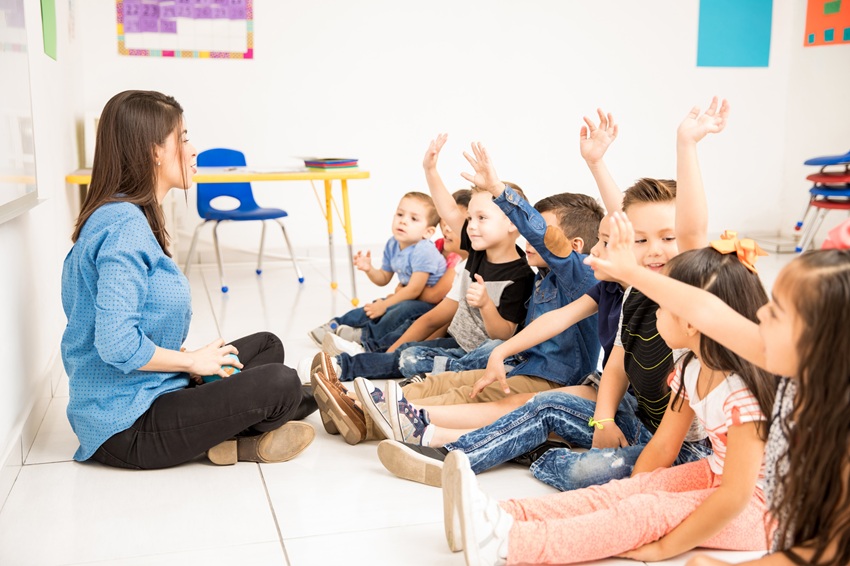
Early childhood education serves as the bedrock for all future academic and personal development. As families navigate the competitive educational landscape in Thailand, deciding when and where to begin a child’s formal learning journey is a crucial crossroad. While formal schooling traditionally focuses on older age groups, modern educational research emphasizes that enrolling a child in a high-quality preschool provides foundational advantages that persist long into their adult lives.
The Critical Window of Early Brain Development
The human brain develops at a more rapid pace during the first five years of life than at any other subsequent stage. During this period, billions of neural connections are formed based on environmental stimuli and interpersonal interactions.
A premium preschool environment is intentionally designed to capitalize on this unique developmental window. Rather than engaging in passive entertainment or rigid academic testing, young learners are exposed to structured, play-based curricula. These activities challenge cognitive faculties, enhance spatial awareness, and strengthen fine motor skills. This early stimulation ensures that brain architecture is optimized for complex problem-solving and critical thinking later in life.
Cultivating Multilingualism and Language Acquisition
For expatriate and local families living in Thailand, early childhood is the prime opportunity to nurture natural language skills. Young children possess an innate ability to absorb multiple languages simultaneously without the cognitive friction experienced by older learners.
An international preschool setting offers an immersive linguistic environment where English or other global languages are woven naturally into daily routines. Through storytelling, collaborative play, and guided peer interaction, children develop vocabulary, accurate pronunciation, and native-like comprehension. This early exposure builds true bilingualism or multilingualism, giving children a distinct cognitive and social advantage in an increasingly globalized economy.
Nurturing Social-Emotional Maturity and Independence
Success in the modern world requires a high degree of emotional intelligence, adaptability, and resilience. Transitioning directly from home care to primary school can sometimes be overwhelming for a young child.
Attending a structured preschool serves as a gentle bridging mechanism. Within a safe, supportive framework, children learn essential social dynamics such as sharing, waiting for their turn, expressing emotions constructively, and resolving minor peer conflicts. Furthermore, managing daily tasks independently such as organizing personal belongings, washing hands, and following classroom routines fosters a sense of self-reliance and confidence that eases future academic transitions.
Laying the Groundwork for Lifelong Academic Curiosity
When a child's earliest memories of learning are associated with discovery, exploration, and joy, they develop a positive attitude toward education that lasts a lifetime.
A well-regarded preschool avoids premature academic pressure and focus on inquiry-based exploration. By encouraging children to ask questions about the natural world, experiment with various materials, and express themselves through creative arts, educators instill a profound curiosity. This intrinsic motivation ensures that when students encounter more demanding academic curricula in middle and high school, they view challenges as opportunities for discovery rather than burdens.
Investing in a quality early childhood education is a strategic decision that shapes a child's entire developmental trajectory. By prioritizing a nurturing and stimulating preschool experience, parents provide their children with the cognitive tools, social confidence, and linguistic fluidness necessary to thrive in an unpredictable future.